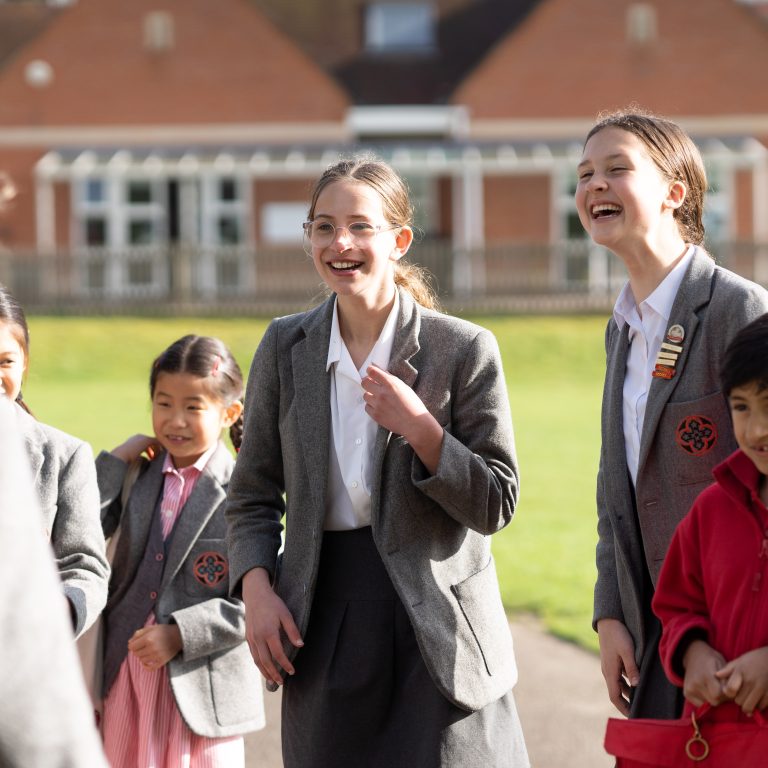

What is a school actually for? It is a question easily lost beneath the timetables, the targets and the ordinary busyness of term, yet it was at the heart of a conversation I joined this week: Sir Anthony Seldon had convened a small, invited gathering at the British Library to discuss a new Institute of Human Flourishing. Its founding argument is a bold one: education has been shaped for half a century by a theory of “human capital”, treating pupils, in effect, as economic units to be optimised, their worth measured in grades, credentials and future earning power. The Institute proposes human flourishing instead as education’s true organising principle: the deliberate cultivation of judgement, character, curiosity and purpose, alongside academic rigour rather than in place of it.
That same framework offered a useful lens only two days later, when we welcomed Year 5 and Year 6 parents to our Pathway Programme evening on Wednesday, mapping excellent routes beyond Bishopsgate at Year 9. In an era of rapid artificial intelligence, where a child’s education goes next matters more, not less: the skills human capital prized most are precisely those now most exposed to automation, while the judgement, creativity and character the Institute speaks of are becoming the scarcer currency. Helping families choose well at thirteen is not a separate task from the one we spend our days on at Bishopsgate, but a continuation of it.
It is a distinction I recognised at once in the ordinary texture of this week at Bishopsgate. Year 2’s trip to the Winchester Science Museum gave curiosity room to run loose among levers, circuits and the odd shriek of delight, learning pursued for its own sake rather than for any test. Year 1’s morning among the borders and glasshouses of Wisley Gardens offered something quieter: patience, and the slow, visible logic of growth. Our Year 3 and Year 4 Open Classroom mornings welcomed parents in to see real, unpolished learning in progress, trust built through openness rather than performance. Last night’s Chapel Recital asked for a different kind of courage, as pupils shared, in public, music they had practised in private.
None of this would register on a human-capital ledger, and that is rather the point. A museum visit, a garden walk, an open classroom, a recital: taken together, they describe a school deliberately building the conditions in which character, curiosity and connection can take root, in the conviction that these, not grades alone, are what a childhood is for. This is not an argument against rigour – a flourishing mind still needs to be stretched and tested – but an argument about what rigour is in service of. As Sir Anthony put it at the British Library, we have spent too long treating education as an investment to be banked, and not nearly long enough as a life to be lived well, starting now.
It is, in truth, a formal articulation of something Bishopsgate has long held true in practice, if not always in name: that resilience is grown through real challenge rather than protection from it, that curiosity deserves space even when it cannot be marked, and that a community which notices its quietest members is doing something as valuable as one that celebrates its loudest achievers. Hearing that instinct argued so persuasively on a national stage was both validating and clarifying – a sharper vocabulary for what we already do, and a yardstick to keep testing ourselves against.
As the gates close this afternoon for half term, I take with me a week that offered, in its own unassuming way, a small working model of flourishing in practice. I hope the coming fortnight gives every family a version of the same thing: time together, room for unstructured play, and permission to measure the days by something other than achievement. We look forward to welcoming everyone back after half-term, ready to keep building a school in which our pupils do not merely succeed, but flourish.
None of this happens by accident, and the last word this half of term should go to the people who make it possible. Our teachers have given these seven weeks their skill, patience and good humour, noticing the child who needed a quiet word as readily as the one who needed stretching further. At Bishopsgate, we recognise that they are not a commodity to be measured and optimised, but role models whose curiosity, integrity and care our pupils absorb long before they remember any particular lesson – the clearest proof we have of flourishing, not capital, at work.
Mr Peter Thacker
Headmaster
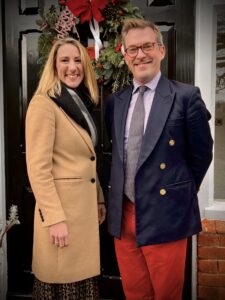 As we usher in the festive spirit and enter the first day of December, the atmosphere at Bishopsgate is brimming with excitement. Much like the anticipation that accompanies the opening of the first door on an advent calendar, our school community is eagerly embracing this joyous season.
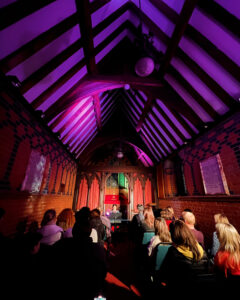 This week has underscored the remarkable talents of Bishopsgate children, displaying their multi-faceted skills across so many areas of our broad curriculum. From a captivating journey through time at the Eton Egyptology Museum to those competitive netball and football matches, our children continue to demonstrate friendship, teamwork, and sportsmanship, embodying the holistic development we aim to instil.
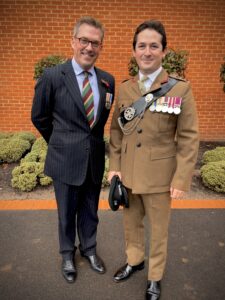
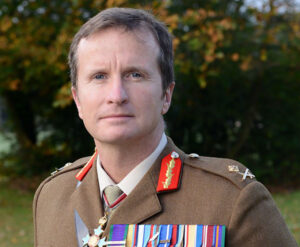 This week, I had the privilege of meeting Major General Paul Nanson, a distinguished figure who recently concluded an illustrious 34-year tenure as Commandant of the Royal Military Academy Sandhurst and Director of Leadership for the British Army. Engaging in conversation with him was not just an opportunity but an encounter with a reservoir of insights that resonated profoundly. I conveyed to him the seamless alignment between his focus on leadership and our approach to cultivating emerging leaders at Bishopsgate.
 en the sound of laughter and joy across the playing fields as children have enjoyed the next exciting instalment of ‘Project Play’, thanks to those who have been so generous in contributing to our new adventure playground.