
The Pillars We Choose
On Tuesday I was at Stowe, for the Learning Skills Trust Skills Symposium, and it is hard to think of a more beautiful setting for a conversation about what education is for. The day was full of talk of pillars, prompted by the Marble Hall that greets every visitor on arrival, its columns rising white and improbably tall against a Buckinghamshire sky. It was a fitting image, and the timing could hardly have been better: preparing young people for work has filled this week’s headlines, and the symposium kept returning, gently but insistently, to a single question worth putting to any school, this one included. Are we focusing on the right things?
Three pillars from the day have stayed with me since, and all three were visible at Bishopsgate this week, often in places I was not expecting to find them. The first is that skills grow fastest when children can name how they are learning – metacognition, in the jargon, though the idea is older and simpler than the word suggests: understanding deepens the moment a child can explain not just the answer but the route they took to it. That principle was on quiet display on Tuesday, when our Year 1 and Year 2 classrooms opened their doors to parents mid-lesson, unrehearsed, so that families watched the thinking itself rather than a performance of it. The second pillar is that depth and breadth are not rivals, that a strong subject discipline is the anchor for a curriculum that connects ideas rather than scattering them. Year 3’s visit to the Eton Egyptology Museum on Wednesday did exactly that kind of connecting, turning hieroglyphs and burial rites into a conversation about how any civilisation, including our own, chooses to remember itself. And the third pillar, that screens and artificial intelligence are reasons to double down on what is most human – curiosity, character, judgement, the ability to work well with others – found its own expression on Thursday, when Nursery and Reception families filled classrooms built for small chairs, and the Chapel filled for a recital that no algorithm could quite have managed in the same way.
For those of us leading schools for children up to the age of thirteen, that is a reassuring message rather than an alarming one. We are not in the business of training for a labour market that will reinvent itself at least twice before our youngest pupils sit an examination that matters to an employer. We are in the business of foundations: a love of learning, resilience, kindness, and the confidence to ask a good question even when the answer is not yet known. Those have a habit of being dismissed as the soft virtues, set against the harder currency of skills. Under a hall built by people confident enough in their own foundations to raise a ceiling that high, they looked very much like the same thing.
There is plenty still to look forward to before this term draws its own foundations together. Next week brings Year 7 to the British Museum to see the Bayeux Tapestry at first hand, Year 5’s maths challenge at Bradfield, and parents’ evenings for Lower Prep and Year 5 alike – each one, in its own way, another chance to show the working rather than just the result. If Stowe taught me anything worth repeating here, it is that the foundations laid quietly now, without much ceremony, are usually the ones still standing once everything built on top of them has changed. That has always struck me as a rather good reason to get them right the first time.

Mr Peter Thacker
Headmaster
 As we usher in the festive spirit and enter the first day of December, the atmosphere at Bishopsgate is brimming with excitement. Much like the anticipation that accompanies the opening of the first door on an advent calendar, our school community is eagerly embracing this joyous season.
 This week has underscored the remarkable talents of Bishopsgate children, displaying their multi-faceted skills across so many areas of our broad curriculum. From a captivating journey through time at the Eton Egyptology Museum to those competitive netball and football matches, our children continue to demonstrate friendship, teamwork, and sportsmanship, embodying the holistic development we aim to instil.
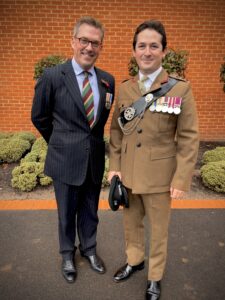
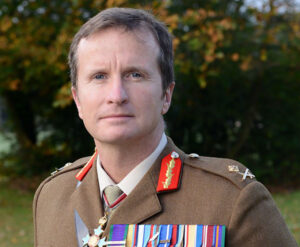 This week, I had the privilege of meeting Major General Paul Nanson, a distinguished figure who recently concluded an illustrious 34-year tenure as Commandant of the Royal Military Academy Sandhurst and Director of Leadership for the British Army. Engaging in conversation with him was not just an opportunity but an encounter with a reservoir of insights that resonated profoundly. I conveyed to him the seamless alignment between his focus on leadership and our approach to cultivating emerging leaders at Bishopsgate.
 en the sound of laughter and joy across the playing fields as children have enjoyed the next exciting instalment of ‘Project Play’, thanks to those who have been so generous in contributing to our new adventure playground.